One of the challenges in attempting a discussion that compares roasting environments is that too many "just know that they are right" without doing any tests or measurements.
An untested concept is, more often than not, nonsense. Transformation processes require laboratory equipment and technical training to understand. Some technologies have been around for a long time and have been saddled with claims that just do not stand up to scrutiny. Drum roasting has many devotees that have been critical of other drum roaster users and other roasting methods. There have been several comments of disbelief about the R. Eggers quotation from "Espresso Coffee" in which he claims that "the typical gas temperature of a drum roaster is 400° - 550°C". The people contesting this did not measure the air temperature in a drum roaster but "felt" that it was way too high. Now, I have not measured it either but then, I don't have a drum roaster nor do I advocate for their use. Some drum roasters use heat exchangers which can be fed with variable volumes of air which consequently alters the air temperature sent to the roasting drum. Perhaps someone will grace us with the range in temperatures achievable and the slope at which changes can be made. What they don't have is an efficient way of transferring the energy in the air to the beans. Without a high pressure blower forcing the hot air through the beans it is only possible to transfer significant heat to the outside layer. In this situation more energy goes up the chimney than into the beans.
Efficient use of energy can only be attained through recirculation of the roasting air which has to be continually scrubbed of smoke to prevent redepositing on the beans. Untreated air sent to the chimneys is responsible for many chimney fires.
Thursday, 13 December 2012


Wednesday, 17 October 2012
High Temperature Blower at Work
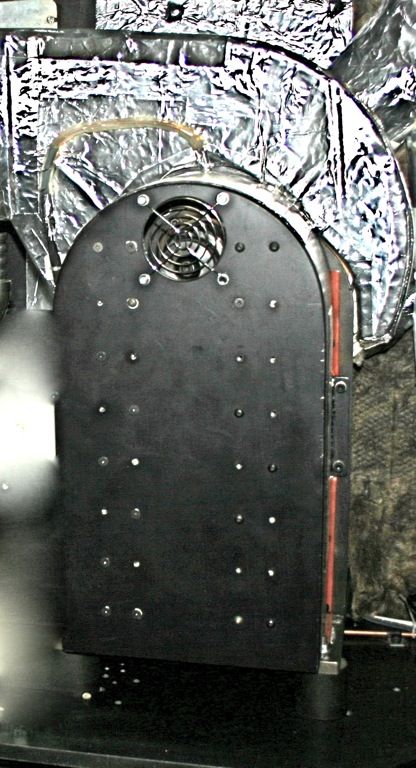 Highly reflective insulation is not an ideal material to photograph but it is easier to blow clean, reflective surfaces do reflect heat, and it effectively contains the ceramic insulation.
The testing has showed that the highest gains in efficiency were made with recirculation of the heated air. Of course that does create some challenges especially if high pressures are required. High pressures require positive displacement or high speeds. Design solutions involve benefit tradeoffs. A really good design makes use of the component's strengths without being penalized for its shortcomings.
Improving the insulation involves preserving the heated area, facilitating the application of the insulation, and reusing the heat that does escape i.e. air that is used to cool the high speed belt. To effectively utilize that cooling air there has to be a sufficient temperature differential between it and the item to be heated. It does work well in preheating a batch because the 70°C flowing air can impart energy to ambient temperature batches.
The air is used to preheat diverse products in order to reduce the load on the main system. The temperature is too low to create a moisture problem therefore condensation requirements are reserved to the main circuit. Another efficiency gain would be to use the processed batch to raise the temperature of incoming batch. Direct contact risks contaminating both batches but heat exchangers have become very efficient providing the throughput is sufficiently high.
Apart from the coffee roasting application we are involved in fluidized bed drying. A high pressure and high temperature convection oven that can also distribute super heated steam is only in the testing stage.
NOTE: Regarding the comments that this is an old Blower; the Blower is new but the Belt Cover has been repurposed. The original cover was made from sheet metal only, while this one, had some vibration dampening bars inside. Further testing showed that noise dampening material was lighter and more effective. We just kept the old cover for testing prototypes. Time for a coffee.
Sunday, 16 September 2012
Updated Hot Air Blower - Canadian Coffee & Tea Show
The High Pressure Hot Air Blower was updated for the Canadian Coffee & Tea Show in Toronto. The new Insulation package improved the heat retention and made the unit even quieter. The improved insulation is directly influenced by the desire to improve the conditions in the Roastery. The direct participation of Roastaire supervisors meant that most of that effort would be directed to reducing both the heat and sound emissions.
Before insulating the Blower we installed improved flexible inlet and outlet connectors to decouple the rotating components from the static parts that could act as "loud speakers". Again the moving parts were balanced to a high standard, better than G2.5, to "nip the noise source in the bud". The new flexible connector is less transmissive and has the added advantage of having a smoother and less restrictive bore.
The deadline of the Canadian Coffee & Tea Show meant that there was no time for picture taking. The fact that we were able to have a "normal" conversation in front of the working blower attests to the effectiveness of the sound containment. After all, to achieve blower pressures it does have to turn at high speeds.
Containing the heat improves the efficiency of the roaster, reduces the temperature of the other components, and keeps the Roastery cooler. The Roastaire components are insulated and mostly double walled, unlike most roasters, which greatly enhances the roasting experience.
This does bring about a philosophical design difference with bare bones roaster manufacturers that are promoting low entry prices. Some show attendees quoted roaster prices that were much lower but the manufacturer omitted to tell the interested parties that an After-burner would be required for roasting in their city and that the After-burner would cost much more than the roaster to buy and to operate. Neither the coffee nor the client should be "burnt".
The Impeller was also redesigned to improve efficiency and reduce noise generation. The Impeller must redirect air that is moving axially to a radial flow as gradually and smoothly as possible. Of course machining a steel Impeller to accomplish this requires many hours in a CNC Mill but if the noise is minimized and the output maximized at the source then the task is easier later on. Aluminum is certainly cheaper to machine but our small pile of stretched, torn, distorted, and exploded off the shelf aluminum Impellers that could not handle our heat requirements attests to the need of using a steel Impeller at elevated temperatures.
After 1500 hrs Aluminum Rotor self destructs at 250°C

Another Aluminum Rotor tears at 250°C

The picture below was taken before the show opened. More picture are located here. During the show there were too many interested people to get a clear shot of the roaster. It was, after all, the only working roaster at the Canadian Coffee & Tea Show in Toronto.
Before insulating the Blower we installed improved flexible inlet and outlet connectors to decouple the rotating components from the static parts that could act as "loud speakers". Again the moving parts were balanced to a high standard, better than G2.5, to "nip the noise source in the bud". The new flexible connector is less transmissive and has the added advantage of having a smoother and less restrictive bore.
The deadline of the Canadian Coffee & Tea Show meant that there was no time for picture taking. The fact that we were able to have a "normal" conversation in front of the working blower attests to the effectiveness of the sound containment. After all, to achieve blower pressures it does have to turn at high speeds.
Containing the heat improves the efficiency of the roaster, reduces the temperature of the other components, and keeps the Roastery cooler. The Roastaire components are insulated and mostly double walled, unlike most roasters, which greatly enhances the roasting experience.
This does bring about a philosophical design difference with bare bones roaster manufacturers that are promoting low entry prices. Some show attendees quoted roaster prices that were much lower but the manufacturer omitted to tell the interested parties that an After-burner would be required for roasting in their city and that the After-burner would cost much more than the roaster to buy and to operate. Neither the coffee nor the client should be "burnt".
The Impeller was also redesigned to improve efficiency and reduce noise generation. The Impeller must redirect air that is moving axially to a radial flow as gradually and smoothly as possible. Of course machining a steel Impeller to accomplish this requires many hours in a CNC Mill but if the noise is minimized and the output maximized at the source then the task is easier later on. Aluminum is certainly cheaper to machine but our small pile of stretched, torn, distorted, and exploded off the shelf aluminum Impellers that could not handle our heat requirements attests to the need of using a steel Impeller at elevated temperatures.
After 1500 hrs Aluminum Rotor self destructs at 250°C
Another Aluminum Rotor tears at 250°C
The picture below was taken before the show opened. More picture are located here. During the show there were too many interested people to get a clear shot of the roaster. It was, after all, the only working roaster at the Canadian Coffee & Tea Show in Toronto.
Wednesday, 12 September 2012
The Roastaire™ visits Canadian Coffee & Tea Show
The Roastaire™ was the only functioning coffee roaster at the Canadian Coffee & Tea Show in Toronto.

The booth was near the Canadian Barista Championships but we were so busy that it was impossible to attend the skill demonstrations.
The Roastaire™ booth was designed to emulate the look of a Roastaire, coffee roaster, in a roastery café. This layout favours the Theatre of Roasting which invites clients to observe the roasting process. The clientele is able to pose questions to the Roastmaster without having the liability of having someone brush against hot surfaces.


After a Freshly Roasted cup of coffee everything just works better. Even technology is receptive!

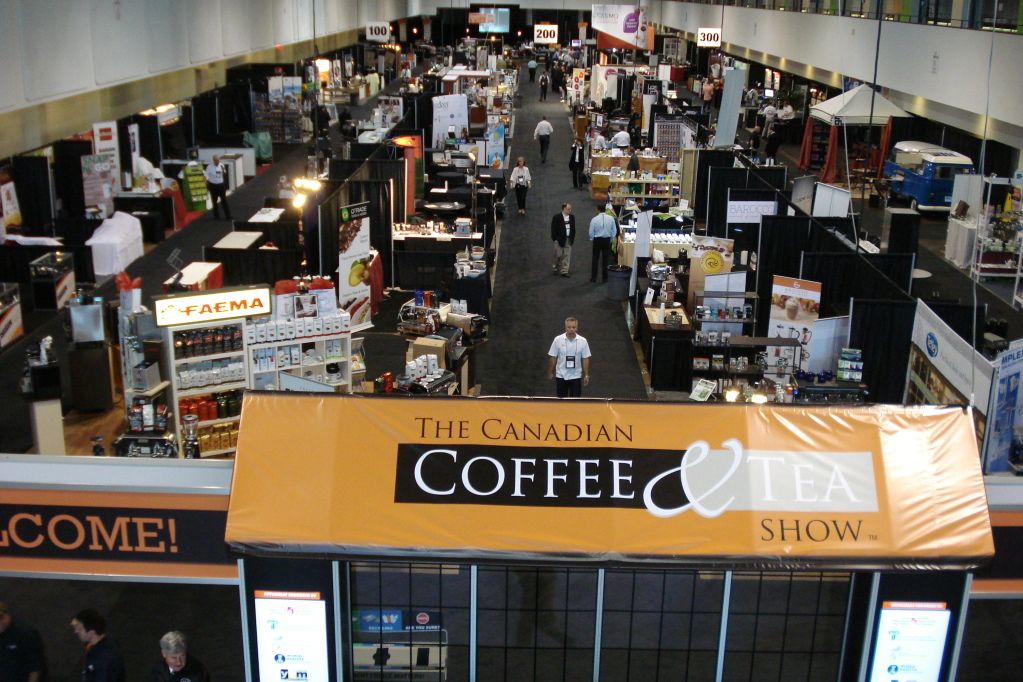
The booth was near the Canadian Barista Championships but we were so busy that it was impossible to attend the skill demonstrations.
The Roastaire™ booth was designed to emulate the look of a Roastaire, coffee roaster, in a roastery café. This layout favours the Theatre of Roasting which invites clients to observe the roasting process. The clientele is able to pose questions to the Roastmaster without having the liability of having someone brush against hot surfaces.
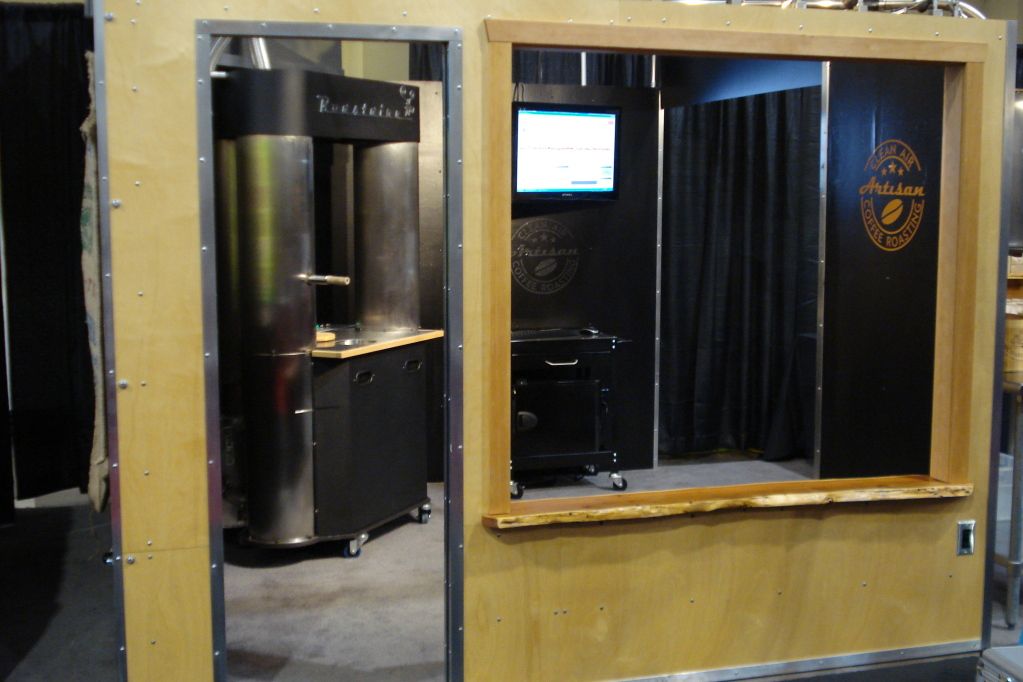
The "roast is arrested" in the Roasting Chamber within seconds then is pneumatically conveyed to the Packaging Area where the beans are cooled for an additional three minutes while the Roastaire™ roasts another batch of beans.
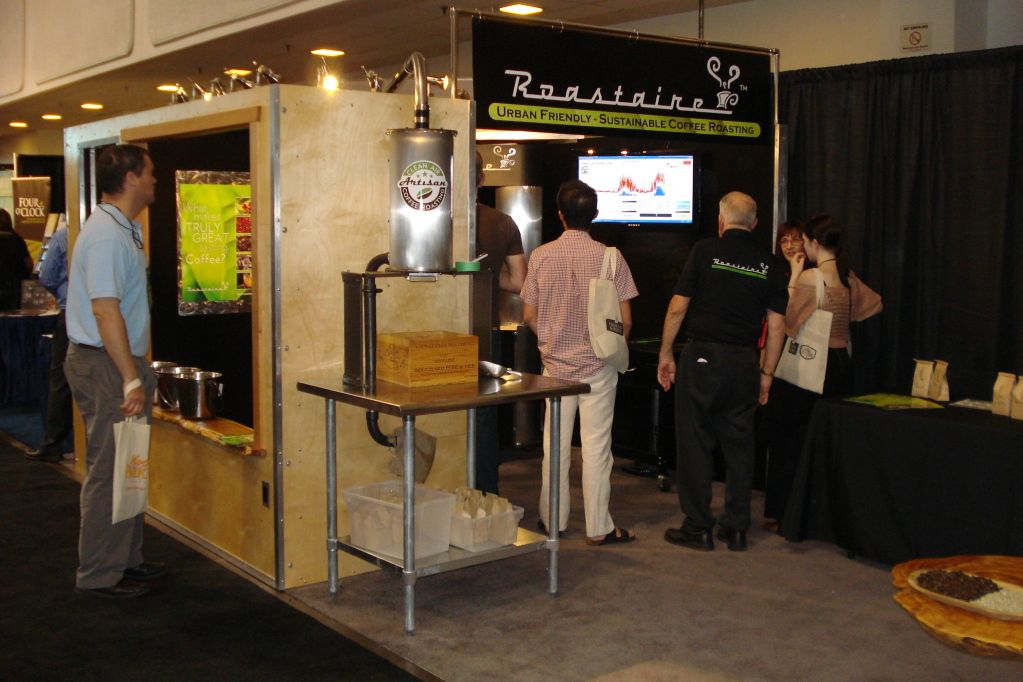
In the picture below Mel, the Roastmaster, is removing the roasted beans from the Cooling Hopper (usually located in the packaging area). The beans are cooled while another batch is roasting. Many people dropped in to view the only functioning Coffee Roaster at the Coffee & Tea Show.
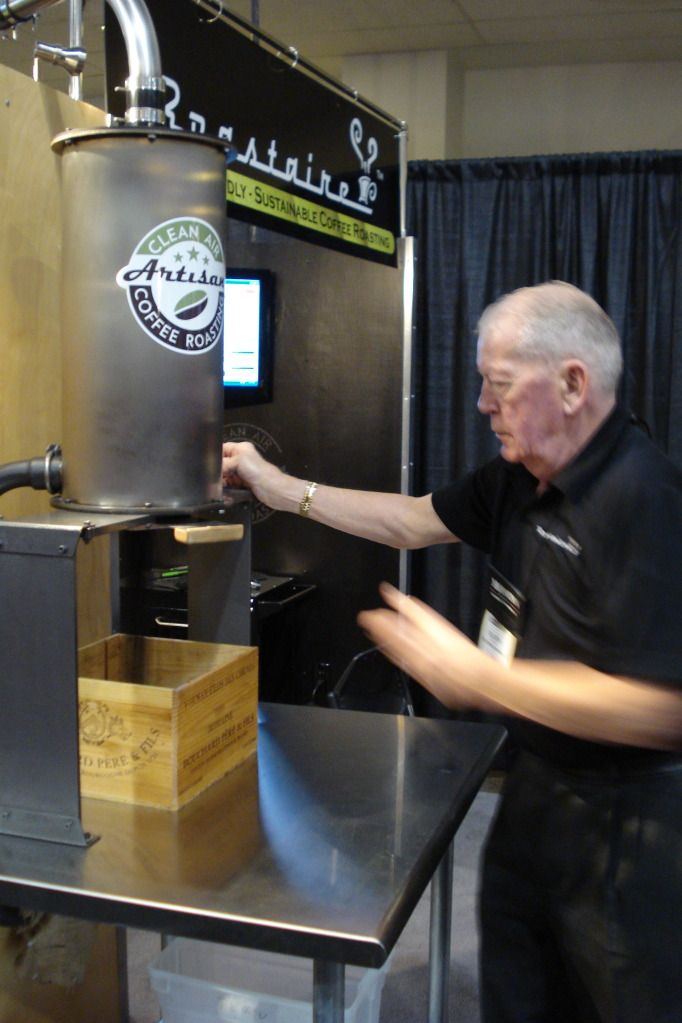
So very close now to a Freshly Roasted cup of coffee.

The tiff to jpg conversion is off which emulates working before enjoying a Freshly Roasted cup of coffee.
After a Freshly Roasted cup of coffee everything just works better. Even technology is receptive!

Subscribe to:
Posts (Atom)