Pages

Showing posts with label NXT Blower. Show all posts

Wednesday, 17 October 2012

High Temperature Blower at Work


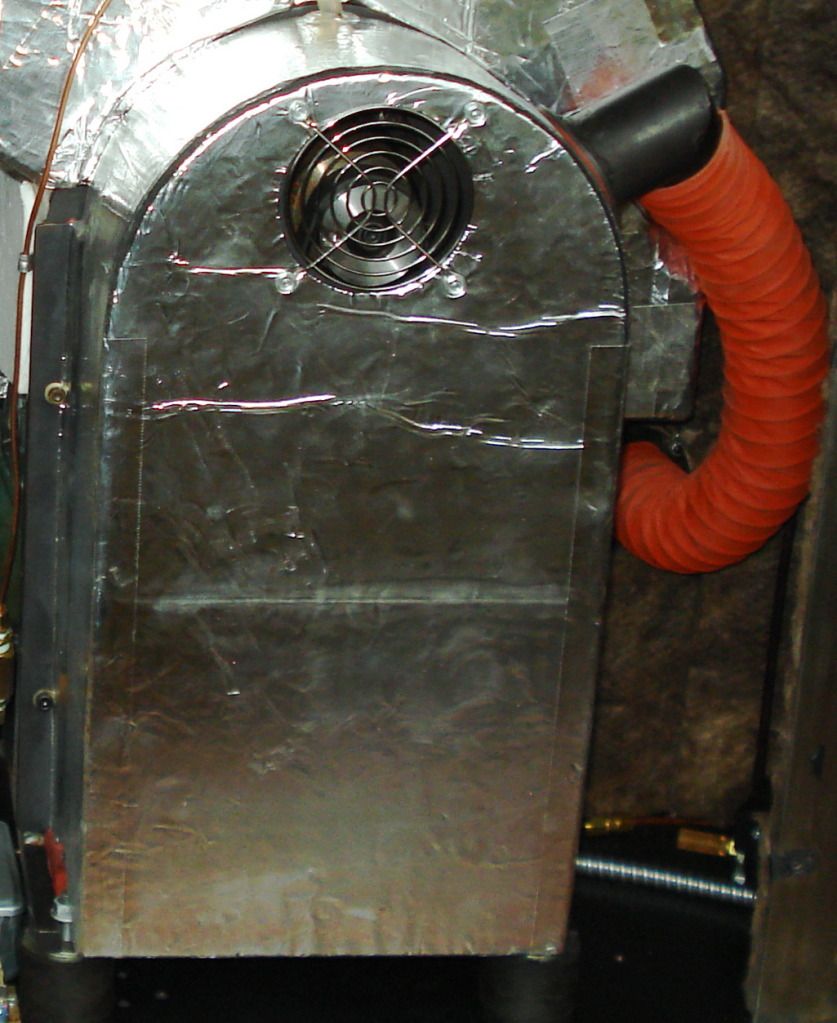
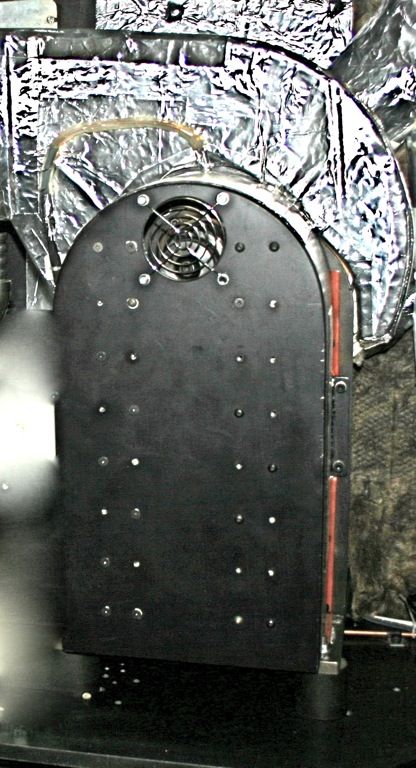
Highly reflective insulation is not an ideal material to photograph but it is easier to blow clean, reflective surfaces do reflect heat, and it effectively contains the ceramic insulation.

The testing has showed that the highest gains in efficiency were made with recirculation of the heated air.  Of course that does create some challenges especially if high pressures are required.  High pressures require positive displacement or high speeds.   Design solutions involve benefit tradeoffs.  A really good design makes use of the component's strengths without being penalized for its shortcomings.

Improving the insulation involves preserving the heated area, facilitating the application of the insulation, and reusing the heat that does escape i.e. air that is used to cool the high speed belt.   To effectively utilize that cooling air there has to be a sufficient temperature differential between it and the item to be heated.  It does work well in preheating a batch because the 70°C flowing air can impart energy to ambient temperature batches.

The air is used to preheat diverse products in order to reduce the load on the main system.  The temperature is too low to create a moisture problem therefore condensation requirements are reserved to the main circuit.  Another efficiency gain would be to use the processed batch to raise the temperature of incoming batch.  Direct contact risks contaminating both batches but heat exchangers have become very efficient providing the throughput is sufficiently high.

Apart from the coffee roasting application we are involved in fluidized bed drying.  A high pressure and high temperature convection oven that can also distribute super heated steam is only in the testing stage.

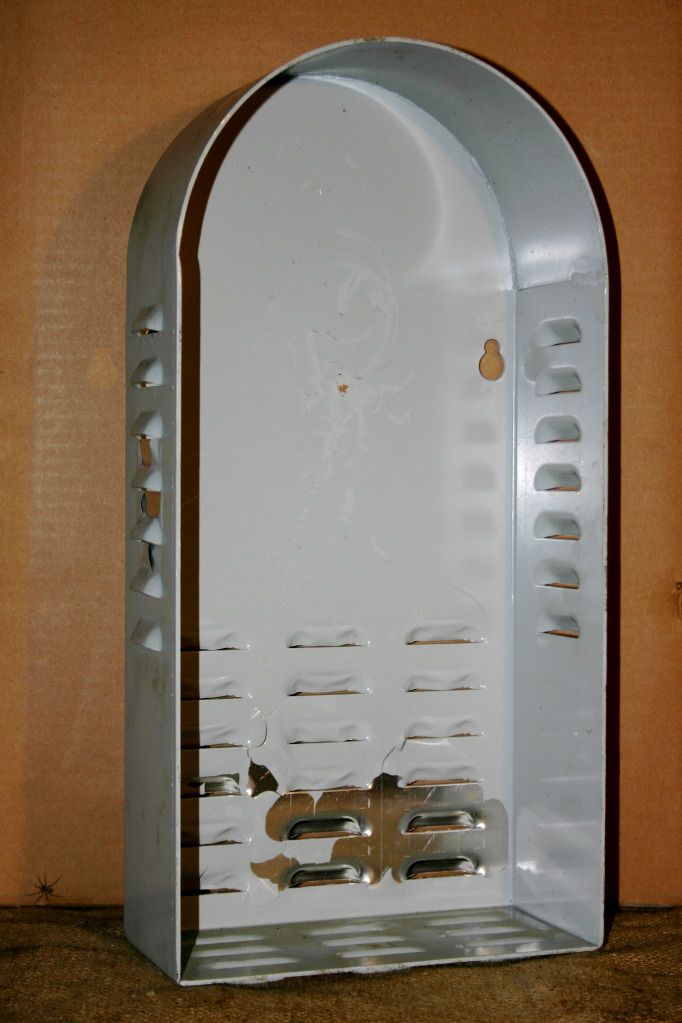
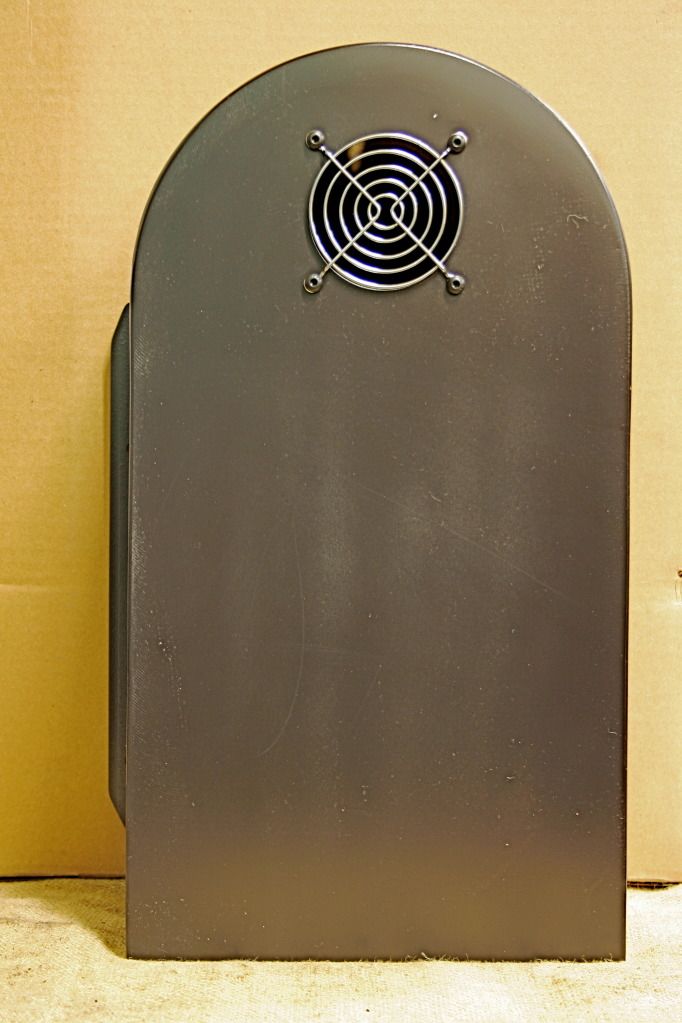
NOTE: Regarding the comments that this is an old Blower; the Blower is new but the Belt Cover has been repurposed.  The original cover was made from sheet metal only, while this one, had some vibration dampening bars inside.  Further testing showed that noise dampening material was lighter and more effective.  We just kept the old cover for testing prototypes.  Time for a coffee.

Tuesday, 14 August 2012

High Pressure Hot Air Blower - MTBF or Down Time?

High temperatures are not conducive to the longevity of rolling components therefore the conventional ambient blower components have the lifespan of a firefly when used at elevated temperatures.  It is almost a universal mechanical truth that items used at higher temperatures have a reduced working life.  It does not mean that durability is impossible.  It means that durability has to be a priority in the design stage and that components are selected based on their ability at surviving in a high temperature environment.

The focus has been on improving MTBF (mean time before failure) but an alternate viewpoint was raised by a "person in the know".  Essentially the comment was that MTBF is important but "down time" is also a critical factor.  Both of these constitute the inconvenience factor for the client especially if one is low and/or the other is high. 

The insulation required for high temperature equipment does not facilitate repairs therefore the selection of these materials is as important as the blower design itself in facilitating a speedy repair.  With this priority in mind there has been a move towards a faster turn around if a repair or maintenance is required.  The redesign is ongoing and alternative solutions are being tested.

Temperature is but one of the challenges.  We are currently testing blowers that are more tolerant when placed in an environment of "nasty" or corrosive gases.

It is doubtful that the maintenance or repair turn-around will approach Formula 1 tire changing experiences but it promises to be a significant improvement.  It does help to have a crew of 12 to undertake the maintenance if there is sufficient room for everyone to do their task.   It is not likely that such a crew will work unimpeded around a blower therefore it will take longer to affect the change but wages and costs will be lower.

Personally I prefer to take a little longer especially if there is a window of freshly roasted coffee reflection to organize the task.

Cheers,

Sunday, 27 May 2012

High Pressure Hot Air Blower - Sound Containment.

NXT Roasters started with off-the-shelf centrifugal blowers of which we got to know the internals too intimately.  There were no guarantees that they would handle the temperature but the salesperson thought that we should get a reasonable MTBF (Mean Time Before Failure).  At the beginning, it was only 25 hours on average!

Virtually every manufacturer claimed that their composite bearings would work at the 250°C air temperature.  They must not have realized that 18,000 rpm was on the faster side which greatly reduced the life of their product.  Regular bearing races are too soft for this temperature and speed combination.  It takes very little Brinelling which creates a looseness that, at 18K rpm, allows  the shaft to vibrate and the bearings self destruct.  Note: the faster the speed the smaller the movement of the vibration, all other things being equal.  Bearings were repacked with high temperature grease that was measured out in milligrams.  Oil bathed bearings were tried.  Many iterations of new seals had to be turned because the stock items were intended for ambient temperatures. Most modifications succeeded in improving the longevity; 25 hrs, 55 hrs, 125 hrs, 225 hrs, 320 hrs, and after a couple years it was over 1300 hrs.  Not that great, but the client could live with it while we were working on a new blower that is featured in the other blog pages.  A specialized bearing manufacturer made a bearing for us that goes like the proverbial bunny.  All we have to do is pay them a lot of money.  The switch over to our blower design started two years ago.  We do not know the MTBF because of the lack of failures (no! no! that is good).

The aim of this blog is to discuss the blower noise that was generated by that first blower compared to what we have today.

The off the shelf blower had an aluminum Belt Guard with a rubber lip that is not shown.  The guard resonated and the RoastMaster wore Ear Protectors.  Obviously the level of balance is greatly affected by the speed of the 6" Rotor.  If that manufacturer recognizes his cover they will realize that they have a problem and then see the solution.  Well, they have more problems than that which is why they do well to focus on ambient temperatures.  The paint has flaked which reflects badly on the quality of the work.

The output of our design was better than expected therefore we were able to reduce the speed.  To improve upon the case design, first, we increased the mass by making the Belt Guard from steel sheet.  It was better, or as they say, "Good, but not so good".


Heavier bar stock was screwed to the front and sides to increase the mass and reduce the amplitude of the resonance.  The roaster was delivered with that modification but the client still found the noise to be disturbing to the working environment.

In his youth the client was a hot rodder and had some experience with taming unwanted frequencies though I suspect that most of his energy went into making the engine louder.


He covered the Roastaire Belt Guard with an aluminized Butyl Rubber sheet product.  It worked so well that the covering panels got the same treatment.  The "sound treatment" was so effective that CBC Radio did part of "On the Island"  Roastery Interview in front of the working Roastaire.

At the Eptech show Ampco's Rick Gagne discussed such a product that they carry.  It is not necessary to cover much more than 25% of the surface to stop the ringing but esthetics would take a beating with less than full coverage.  The alternative was to place strips on the interior walls but if the bond fails after a while then that will certainly lead to belt failure.   Perhaps we can revisit and find a conclusion after a year - with the help of a freshly roasted coffee.

Friday, 30 December 2011

Roaster Carbon Calculations

The good people at Fresh Cup used the U.S. EPA Carbon Calculator to compare the Roastaire Carbon Footprint with that of a gas roaster.   


A 100 lbs.  of roasted coffee = 1 car off the road for 16 days  


This is how our roasting method impacts the environment. The energy ratio is  2 light bulbs versus the drum roasters 48 light bulbs.  Gas is a cheaper form of energy therefore in dollar terms the approximate heating cost of a gas fired roaster with afterburner is 16¢ per pound vs. the 2.5¢ for the recirculating Roastaire.


Evidently the Roastaire is way more environmentally friendly and cheaper to operate.  


The 100 lbs. of roasted beans represents about 3 hours of roasting, depending on the degree of roast.  Think of the savings to the environment and to the owner.  


It's time for a cup of freshly roasted coffee and a read about selling carbon credits.


Thursday, 15 December 2011

High Pressure & High Temperature Industrial Blower

The suggested applications required either high temperature or high pressure but not both.  Googling the terms "high pressure" "high temperature" Blower brings up every type of air mover imaginable.  The designations are quite "loosey goosey" and often stretched so that it will accommodate the particular product being offered for sale.


I expected that this blower rated at 250°C would be at the bottom end of high temperature blowers but no - some units were given the same designation yet could only operate at temperatures that were 100°C lower.  


Some units had operational ceilings that were twice as high as what this one was tested at but their "high pressure" turned out to be .3 psi or 2,070 pascals which implies that it turns relatively slowly.  Low speeds are attainable with off the shelf bearings.  Therefore, it is not a niche that is of interest.


The version pictured is currently on the test bench where it is subjected to high temperature moist air.  Previous tests of off the shelf blowers demonstrated bearing corrosion in less than 100 hours.  It is possible that had it been a continuous test the bearings would have survived longer but running tests that lasted a few hours compromised the bearings too soon.


We are currently using the blower to fluidize and roast beans (coffee and others).  The pressure output of over 1 psi ( 6,894 pascals ) at 250°C  could certainly fluidize denser materials at a lesser depth.  At these temperatures the blower could be the heart of a monstrous pop corn pumper.  With continual introduction of kernels the output will compete with Vesuvius.  Such a machine would have to be brought to corn country Taber for testing.  


A recycled hot air requirement is fundamental to this niche, otherwise it is more efficient to heat the air after the blower i.e. an air knife.  Now, if a high temperature air knife was in a closed system nearly every blower in the marketplace would be inappropriate.


Hot air accelerated drying in an industrial setting would require a moisture extraction process but if it is a recirculated hot air application this is a custom application.  


Have a freshly roasted coffee and think of another application for the unit.

Thursday, 1 December 2011

High Temperature Industrial Blower

"Delivering the air with sufficient pressure at 240°C is a challenge that will be addressed in a later post.  Sufficient to say that no off the shelf hot air blowers were found, resulting in another product development." from the earlier post Heating Coffee Beans to Roasting Temperature.


Note:  A fan generally turns slower than a blower and therefore cannot reach the same pressure differential (inlet / outlet).  Fluidizing a batch of coffee requires more pressure than a fan delivers.


The easy, but wasteful, way to circulate hot air is to heat it after it passes through the blower.  This means that all the air has to be heated from ambient temperature to final temperature before it is vented while, if the air is recirculated, only the lost heat needs to be replaced.  The higher the temperature the more efficient the recirculation process becomes.  The advantage is not a few percentage points but rather tens of percentage points.


Our prime interest is roasting coffee which becomes much more efficient when the heated air is recirculated.  No off the shelf unit could be purchased.  Initially we tried then modified an existing name brand blower.  The MTBF (mean time before failures) improved from the initial few hours to over 1,500 hours but the maintenance and problems required a new solution.  The concept was simple but mastering the quirks was not always a linear process.


The designed temperature ceiling for the current model is 300°C but it has only been operated up to 270°C.  Since we did not find this to be an optimum roasting temperature the importance of establishing a higher operating threshold lost its urgency.  There is reason to believe that the upper temperature limit can be raised significantly.


Apart from surviving the high temperature the priority is to develop sufficient pressure to create a fluidized bed so that the coffee beans are evenly heated and continually mixed.  The pressure, while roasting, is just under 1 psi (approximately 6 kPa).  This is the flowing pressure not dead head pressure.  


The current blower configuration is driven by a 3 Hp electrical motor connected to a three phase contactor based motor controller.  The Belt Guard Cover was removed for the photo.


Have a freshly roasted coffee and think of another application for the unit.